Congressional oversight of the food industry has intensified. Whether the trigger is a high-profile recall, a food safety outbreak, a supply chain failure, or a policy dispute with a federal agency, food companies increasingly face committee inquiries, document requests, and formal hearing summons. Your regulatory affairs team knows how to manage FDA inspections and USDA audits.
Congressional hearing preparation is different – and the legal exposure it creates is different too. I’ve watched well-run companies treat a congressional inquiry like a press relations problem, managing it through communications teams while legal counsel sat on the periphery. That approach rarely ends well.
This guide covers what congressional oversight of food industry companies actually involves, how to protect your legal position from the first document request through a formal hearing, and how to coordinate legal counsel and government affairs resources when both are needed simultaneously.
This content is for general informational and educational purposes only and does not constitute legal advice. Congressional oversight procedures vary by committee and matter. Consult a licensed attorney experienced in congressional investigations for guidance specific to your situation.
What Congressional Oversight of Food Industry Companies Actually Looks Like
Congressional oversight authority is broad and its procedural rules are less formal than federal court or agency proceedings. Committees can request documents, issue subpoenas, compel testimony, and publish findings – all without the evidentiary standards and procedural protections that govern judicial proceedings. For food industry companies, that creates a distinctive legal environment where the reputational stakes are high, the procedural protections are limited, and the consequences of missteps compound quickly.
Oversight of food industry companies typically originates from one of several triggers:
- Food safety incidents – a multistate outbreak, a major recall, or a pattern of contamination events that draws committee attention to agency response adequacy or industry practices
- Supply chain failures – import safety concerns, ingredient sourcing disputes, or shortages that affect consumer access to food products
- Regulatory disputes – company conflicts with FDA or USDA that escalate to congressional attention, either through agency referral or advocacy by industry or consumer groups
- Pricing and competition concerns – antitrust-adjacent inquiries into food industry consolidation, pricing practices, or market concentration
- Labeling and advertising controversies – consumer protection concerns that committees investigate alongside or ahead of FTC or FDA action
The committee that initiates oversight matters. The Senate Committee on Health, Education, Labor, and Pensions (HELP) and the House Energy and Commerce Committee have primary jurisdiction over FDA-regulated food products. The Senate and House Agriculture Committees have jurisdiction over USDA and FSIS matters. The Senate Commerce Committee and House Judiciary Committee handle competition and trade issues. Each committee has its own procedural rules, staff relationships, and oversight priorities – and a congressional hearing preparation strategy needs to account for the specific committee’s history and current political posture.
Document Preservation – The Legal Obligation That Begins Before Any Request
The single most consequential legal decision a food company makes in the early stage of a congressional oversight matter is whether to implement a document litigation hold – and when. Document preservation obligations in the congressional context are not as clearly defined as in civil litigation, but the legal and reputational consequences of document destruction or loss after a company has reason to anticipate an investigation are severe.
What constitutes adequate notice to trigger preservation obligations is a judgment call that requires legal counsel. A news report that a committee is investigating your industry sector may be sufficient. A direct communication from committee staff is certainly sufficient. A formal document request or subpoena eliminates any ambiguity – but waiting for those before implementing a hold is too late if documents were deleted in the interim.
A congressional hearing preparation document hold should cover:
- Email and messaging platforms across all relevant custodians, including personal devices used for business communications if company policy permits or requires their use
- Regulatory correspondence with FDA, USDA, FSIS, CBP, and any other agency whose oversight of the company is relevant to the inquiry
- Internal reports and analyses relating to the subject matter of the investigation – food safety records, quality control data, complaint logs, audit findings, and corrective action documentation
- Financial records to the extent the inquiry implicates pricing, costs, or business decisions with financial dimensions
- Board and executive communications discussing the subject matter, including board minutes, executive briefing materials, and strategic planning documents
- Third-party communications with suppliers, co-manufacturers, distributors, and trade associations that relate to the investigation subject
Attorney-client privilege protection for documents generated during the oversight response is a separate and critical issue. Communications between company personnel and outside legal counsel made for the purpose of obtaining legal advice are generally privileged – but that protection is not automatic, does not extend to documents that predate the attorney-client relationship, and can be waived through careless document production or public disclosure. Establishing a clear privilege protocol at the outset of an investigation protects the company’s ability to communicate candidly with counsel throughout the process.
Coordinating Legal Counsel and Government Affairs During Congressional Investigations
Food industry companies facing congressional oversight typically have two distinct professional resources engaged simultaneously – outside legal counsel focused on legal exposure and privilege protection, and government affairs professionals focused on political relationships and strategic positioning with the committee. These functions need to work together. When they operate in silos, the results are predictable: legal strategies get undermined by political communications, and government affairs relationships get complicated by legal positions taken without political awareness.
The coordination model that works assigns clear lanes and establishes legal counsel as the decision authority on matters with legal consequence:
Legal counsel leads on: document review and production decisions, privilege determinations, witness preparation, testimony content, any communications that may create legal admissions, and response strategy for formal subpoenas or document requests.
Government affairs leads on: committee staff relationship management, political intelligence about committee priorities and member positions, strategic timing of voluntary cooperation, and coordination with trade associations and allied industry stakeholders.
Joint decisions include: whether and when to pursue voluntary accommodation with the committee, how to characterize the company’s cooperation posture publicly, whether to request a private briefing in lieu of formal testimony, and how to sequence legal and political outreach to committee staff.
| Function | Leads On | Defers On |
|---|---|---|
| Legal Counsel | Document production, privilege, witness prep, subpoena response, testimony content | Committee political dynamics, member relationships, trade association coordination |
| Government Affairs | Staff relationships, political intelligence, voluntary cooperation timing, trade association alignment | Privilege determinations, factual representations to committee, formal response strategy |
| Joint Decision | Voluntary vs. compelled cooperation posture, public characterization of cooperation, private briefing requests | N/A – both functions must align before any decision proceeds |
The most common breakdown occurs when government affairs professionals make factual representations to committee staff – orally or in writing – without legal review. Those representations can constitute admissions, can be inconsistent with the legal position the company needs to take in formal proceedings, and can be used against the company in subsequent agency enforcement actions or civil litigation. Every substantive communication with committee staff during an active investigation should go through legal counsel before it goes to the Hill.
Congressional Hearing Preparation – Witness Defense from Preparation Through Testimony
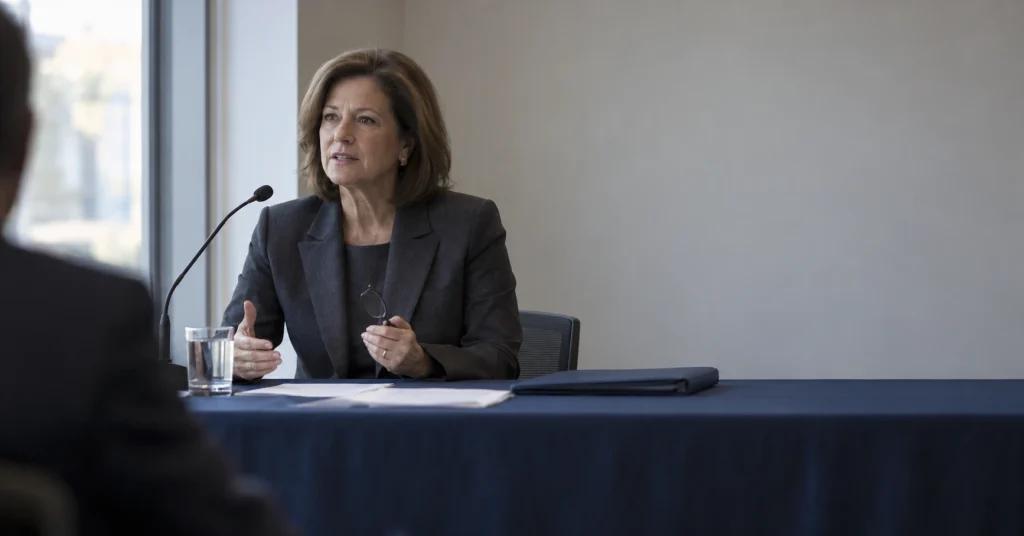
If your company reaches the point of producing a witness for congressional testimony – whether voluntarily or in response to a subpoena – the preparation process is the most important legal work in the entire oversight response. Congressional hearing preparation for witnesses is specialized legal work that differs from deposition preparation, trial preparation, and media training in ways that matter.
Congressional witnesses face a distinctive set of risks:
- False statements exposure under 18 U.S.C. § 1001, which criminalizes material false statements to Congress, applies to both sworn testimony and unsworn representations to committee staff and members
- Contempt of Congress for failure to comply with a valid subpoena or for evasive testimony that a committee treats as non-responsive
- Parallel proceeding risk when testimony before Congress occurs simultaneously with agency enforcement investigations, civil litigation, or DOJ inquiries – statements made in one proceeding create risk in all others
- Fifth Amendment considerations where the witness has personal exposure that overlaps with the company’s institutional exposure, requiring separate legal representation for the individual witness
Effective congressional hearing preparation covers the substance of likely questions, the procedural rules governing testimony, how to handle questions the witness cannot or should not answer, and the demands of testifying in a public hearing. Witnesses need to understand that committee members are not neutral fact-finders – they are elected officials with political objectives, and questions are often designed to generate sound bites rather than accurate information.
Preparation should include at minimum:
- Thorough review of all documents the committee has received or requested, so the witness is not surprised by exhibits
- Mock hearing sessions with attorneys playing committee members across the political spectrum represented on the relevant committee
- Clear protocols for handling questions that implicate privilege, parallel proceedings, or matters outside the witness’s personal knowledge
- Coordination with legal counsel on any opening statement the witness intends to submit, which becomes part of the formal record
When Legal Counsel Needs to Engage Government Affairs and Vice Versa
Congressional hearing preparation doesn’t happen in a vacuum. Political context shapes legal strategy, and legal constraints shape what government affairs can do. The most effective oversight responses treat both as a single integrated challenge.
Legal counsel needs to know from government affairs:
- The political motivation behind the inquiry – whether it is driven by member constituent concerns, advocacy group pressure, media attention, or inter-agency conflict
- Which committee staff members are leading the investigation and what their prior oversight work reveals about their approach
- Whether allied industry members or trade associations have received parallel requests, and how they are responding
- The committee’s timeline and whether the inquiry is tied to pending legislation or upcoming reauthorization proceedings
Government affairs needs to know from legal counsel:
- What documents and facts are legally sensitive and should not be volunteered in informal staff conversations
- Whether there are parallel agency enforcement matters that constrain what can be said to committee staff about specific incidents or decisions
- What legal positions the company intends to take in formal proceedings, so political messaging doesn’t contradict them
- The privilege status of materials that government affairs may be tempted to share informally to demonstrate cooperation
OFW Law’s practice includes both regulatory defense counsel and a government relations team with direct experience before the congressional committees that oversee food and agriculture – giving food industry clients integrated legal and political support for oversight matters without the coordination risk of using separate firms. Learn more about OFW Law’s government relations practice at ofwlaw.com/government-relations/.
Responding to Congressional Inquiries – Voluntary Cooperation vs. Compelled Response
One of the earliest and most consequential decisions in a congressional investigation is whether to cooperate voluntarily with the committee’s requests or to require the committee to use its compulsory process. This is not a binary choice between full cooperation and stonewalling – it is a spectrum of positions that legal and government affairs counsel need to evaluate together based on the specific inquiry, the political environment, and the company’s legal exposure.
Voluntary cooperation signals that the company has nothing to hide and often produces better political outcomes – shaping the inquiry narrative before formal proceedings begin. But it also means producing documents and potentially making witnesses available without the procedural protections that attach to compelled process, including formal privilege assertion mechanisms available when responding to a subpoena.
Compelled process – requiring a subpoena before producing documents or testimony – preserves procedural rights, allows formal privilege logs, and creates a clearer record of what was produced and under what conditions. It also signals non-cooperation, carrying political costs that affect how the committee characterizes the company in public communications and final reports.
The right answer is specific to each matter. OFW Law’s attorneys have represented food industry companies in congressional oversight and government investigations, with the ability to assess both dimensions of that threshold decision. Contact OFW Law for investigation response counsel.
The information in this article is for general educational purposes only and does not constitute legal advice. Congressional oversight procedures vary significantly by committee, matter, and political context. Contact a licensed attorney with congressional investigation experience for guidance on your specific situation.