OFW’s Food & Agriculture team regularly monitors announcements and policy issuances from FDA, USDA, and other agencies to keep our clients apprised of regulatory developments that may impact their business. Here are a few of the significant developments from April. If you have any questions or would like more information, please do not hesitate to reach out to us.
U.S. Food and Drug Administration (FDA)
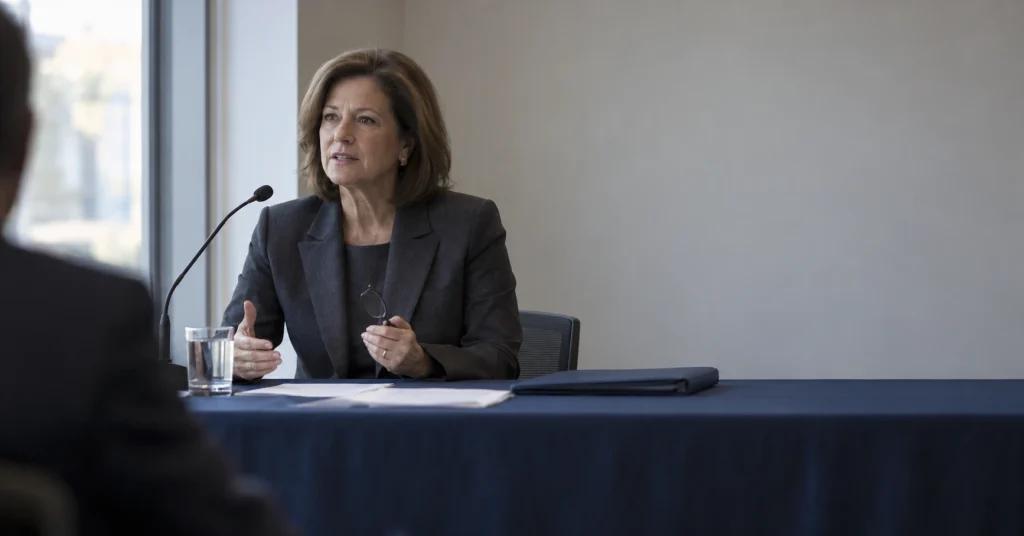
- On April 21, 2026, U.S. Health and Human Services (HHS) Secretary Robert F. Kennedy Jr. appeared before the Senate Appropriations’ Health Subcommittee. In response to questioning, Secretary Kennedy discussed defining ultraprocessed foods (UPFs) and issuing a final Front-of-Package (FOP) rule. In response to a question on UPFs, Secretary Kennedy stated that a “rule” was in the final stages of Administration review, though it was unclear if he was referring to the FOP final rule or yet-to-be-proposed rule on UPFs. He also stated that an FOP final rule would include a stoplight warning scheme and seemed to suggest that a UPF definition would be in the FOP final rule.
- On April 29, 2026, the House Committee on Energy and Commerce held a subcommittee hearing, “Healthier America: Legislative Proposals on the Regulation and Oversight of Food.” This hearing was open to the public and press and livestreamed online. The hearing focused on twenty-eight (28) pieces of legislation addressing a wide-range of food-policy issues, including: Reform of the Generally Recognized as Safe (GRAS) framework, food chemical safety and reassessment authorities, nutrition and FOP labeling modernization, infant formula and baby food safety, oversight of dietary supplements, and federal‑state food safety coordination and information sharing.
United States Department of Agriculture (USDA)
- As of this month, USDA’s Food Safety and Inspection Services (FSIS) has launched its new askFSIS “Q&A Portal.” FSIS created this new format as a one‑stop, searchable resource that organizes consumer, policy, and industry questions by topic, audience, and function, offering enhanced navigation, multilingual search, tagging, and a streamlined submission process to work to improve usability, relevance, and transparency.
- On April 23, 2026, USDA announced a reorganization of FSIS to modernize operations, streamline support functions, and reduce the Washington, D.C. footprint of the Agency. The reorganization announcement changes FSIS in four main ways:
- Creates a new National Food Safety Center in Urbandale, Iowa;
- Opens a Science Center in Athens, Georgia;
- Shifts most of the National Capital Region workforce out of Washington, D.C.; and
- Adds a presence in Fort Collins, Colorado, to support international activities.
- As of April 30, 2026, USDA’s Labeling and Program Delivery Staff (LPDS) is currently evaluating label submissions received between March 19 and March 20, 2026. As companies submit labels, keep in mind that the turnaround time for labels is currently about 29 business days.
Other
- The April 10, 2026, update announced that the U.S. Customs and Border Protection (CBP) had launched the first phase of the Consolidated Administration and Processing of Entries (CAPE), a new system being developed to manage the large volume of entry transactions and tariff refunds resulting from litigation over IEEPA‑based tariffs. CAPE is intended to centralize and streamline how CBP processes entries and refunds, with full system completion required by April 20, 2026.
- On April 30, 2026, the House of Representatives passed its version of the Farm Bill; the Senate still needs to pass its version of the legislation. The House version includes Rep. Thomas Massie’s “Processing Revival and Intrastate Meat Exemption” (PRIME) Act and what is known as the “Save Our Bacon” Act.
- The PRIME Act would establish a pilot project to permit intrastate sales of custom-slaughtered beef, pork, and other meat products (i.e., processed at certain state-inspected facilities) without federal inspection.The Save Our Bacon Act would prohibit states from setting production standards for livestock products sold in interstate commerce that differ from federal law. It aims to nullify state-level laws like California’s Proposition 12 and Massachusetts’ Question 3.
***
Please contact Kyla Kaplan ([email protected]) if you have any questions or are interested in additional assistance.