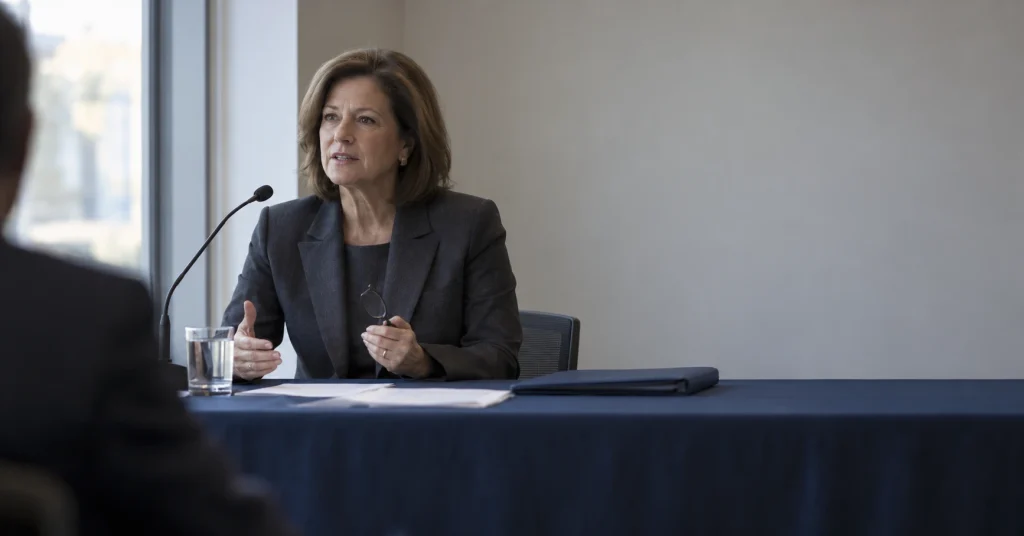
Your regulatory affairs team fields FDA warning letters and USDA inspection findings as a matter of routine, often through the firm’s broader agriculture and agribusiness practice. Legislative advocacy testimony is a different discipline entirely, and food and agriculture companies that treat it like a communications exercise usually leave the committee record weaker than when they walked in. When your company chooses to testify before a congressional committee to advance a policy position, rather than responding to a subpoena or an oversight inquiry, the preparation work looks less like a press briefing and more like building a legal record designed to survive scrutiny long after the hearing ends.
This guide covers voluntary legislative advocacy testimony specifically. If your company has instead been summoned before a committee in connection with an investigation, recall, or enforcement matter, our guide to congressional hearing preparation for oversight and investigations addresses that separate and more adversarial process.
What is legislative advocacy testimony? Legislative advocacy testimony is voluntary oral or written testimony a company or trade association offers to a congressional committee to advance a specific policy position, such as Farm Bill provisions, appropriations priorities, or regulatory reform, as distinct from testimony compelled by an oversight or investigative subpoena.
When and Why Food Companies Provide Voluntary Legislative Advocacy Testimony
Food and agriculture companies most often volunteer for legislative testimony during three recurring windows. Farm Bill reauthorization years bring committee markups on crop insurance, conservation, and nutrition titles that directly affect commodity pricing and supply chains. Annual appropriations cycles determine funding for the agencies your operations answer to daily, including FSIS inspection staffing and FDA’s food safety budget. And standalone regulatory reform bills, covering everything from food date labeling to import inspection authority, create narrower but higher-stakes windows where a single company’s data can shape the final text.
The decision to offer legislative advocacy testimony is a business judgment before it is a communications one. A company should weigh whether it has a factual record, operational data, or a customer impact story that a trade association’s general testimony cannot capture, and whether the reputational exposure of a public hearing is justified by the policy stakes. Companies that testify without a clear answer to “what outcome are we trying to move” tend to produce testimony that reads well and changes nothing.
How to Identify the Right Congressional Hearing for Your Advocacy Message
Not every hearing on a related topic is the right venue. Start with the committee of jurisdiction. Farm Bill matters run through the House and Senate Agriculture Committees; food safety funding runs through the Agriculture Appropriations Subcommittees; FDA authority questions can also surface in House Energy and Commerce or Senate HELP, depending on the provision. Confirm jurisdiction before investing preparation time, since testimony submitted to a committee without primary jurisdiction over the issue rarely influences the outcome.
Next, assess the hearing type. Legislative hearings on a specific bill or markup offer the clearest path to influencing text before it moves. Roundtables and stakeholder listening sessions carry less formal weight but often shape which provisions get serious consideration later. Track committee announcements, markup schedules, and member statements in the months before a hearing is scheduled, since committees typically decide their witness list weeks in advance and last-minute requests rarely succeed.
Companies should also confirm whether they are more effective testifying individually or coordinating with a trade association. Individual testimony carries more specific operational credibility. Association testimony carries more perceived political weight because it represents a broader constituency. Many companies do both, submitting individual written testimony for the record while supporting a trade association’s oral appearance.
Structuring Legislative Advocacy Testimony That Moves Committee Members – The Five-Element Framework
Testimony that influences a hearing record consistently includes five elements.
- A specific ask. Name the provision, amendment, or funding level you want the committee to adopt, in the first paragraph, not the last.
- A credibility anchor. Establish why this company’s perspective matters, through operational scale, regulatory history, or firsthand data the committee cannot get elsewhere.
- Quantified impact. Replace general claims with figures, using company data, USDA or FDA statistics, or independent studies wherever the underlying numbers can be verified.
- A response to the counter-argument. Address the strongest objection to your position directly, since committee staff and opposing witnesses will raise it regardless.
- A record-ready closing. End with the specific action requested, phrased so it can be quoted directly in a committee report or member statement.
This framework applies equally to a two-page written statement and a five-minute oral appearance. The difference is compression, not substance.
Coordinating Written and Oral Testimony – What Each Accomplishes
Written and oral testimony serve different functions, and companies that treat them as the same document in two formats waste the opportunity. Written testimony, typically five to ten pages, becomes the permanent hearing record. It can carry footnoted data, appendices, and legal citations that would never survive an oral reading. This is the document staff and opposing counsel will cite for years afterward, so every factual claim needs a source that can withstand a follow-up records request. House Rule XI, clause 2(g)(5) requires witnesses before House committees to file written testimony in advance and limit their oral presentation to a brief summary of that filing, which is the formal basis for the written-versus-oral split most committees enforce.
Oral testimony, typically three to five minutes, has one job, which is to make committee members remember the single point you most need them to act on. It should distill the written statement’s specific ask into language that survives being quoted out of context, since a well-constructed sentence from oral testimony is more likely to appear in a member’s floor statement or a news account than any line from the written record.
Both documents should track the current Farm Bill or appropriations cycle explicitly. Testimony that references stale provisions or an expired bill number signals to committee staff that the witness has not tracked the legislative calendar closely, which undercuts credibility before the substance is even considered.
Working With Lobbyists and Government Relations Attorneys in Testimony Preparation
Legislative advocacy testimony preparation sits at the intersection of communications strategy and legal compliance, and companies that route it entirely through a communications team or outside lobbyist without legal review take on avoidable risk. The Lobbying Disclosure Act (LDA), codified at 2 U.S.C. Chapter 26, and the Foreign Agents Registration Act (FARA) both carry registration and disclosure obligations that can attach to activity connected to testimony preparation, including meetings with committee staff and coordination with foreign parent companies or affiliates. Our guide to LDA, FARA, and congressional gift rule compliance covers where these obligations most often catch companies by surprise.
A government relations attorney’s role is to confirm registration obligations before Hill meetings begin, review written testimony for statements that could create litigation exposure in unrelated matters, and coordinate the legislative message with any parallel regulatory positions the company holds before FDA or USDA. A company already engaged in USDA or FDA rulemaking on the same topic should keep its legislative testimony and its regulatory comments consistent. Our guide to FDA and USDA rulemaking preparation addresses the regulatory-comment side of that coordination.
What Happens After Testimony – Follow-Up, Q&A, and Relationship Development
The hearing itself is rarely the end of the process. Committees routinely submit written questions for the record after a hearing concludes, and companies typically have a short window, often two weeks, to respond in writing. These answers become part of the permanent record alongside the original testimony, so they deserve the same legal review as the original statement.
Effective legislative advocacy also treats the hearing as the start of a relationship rather than a single appearance. Committee staff who handled your testimony are the same staff who will field markup questions, negotiate conference report language, and field agency implementation questions after passage. Companies that follow up with additional data, respond to staff questions quickly, and stay visible through the full Farm Bill legislative cycle consistently see more of their language survive into final text than companies that appear once and disengage.
Frequently Asked Questions
How long should written legislative testimony be compared to oral remarks?
Written testimony for the hearing record typically runs five to ten pages, while oral remarks are limited to three to five minutes under most committee rules. The oral statement should distill the written testimony’s single most important ask rather than attempt to summarize the full document.
Does testifying voluntarily require Lobbying Disclosure Act registration?
It depends on the company’s broader pattern of contacts with Congress, not on the testimony appearance alone. A single hearing appearance does not automatically trigger LDA registration, but related activity, such as pre-hearing meetings with committee staff, can. Companies should confirm their registration status with government relations counsel before scheduling any Hill meetings connected to the testimony.
What is the difference between voluntary legislative advocacy testimony and oversight testimony?
Voluntary legislative advocacy testimony is offered by the company to advance a policy position, and the company generally controls its message and timing. Oversight testimony is compelled in connection with an investigation, recall, or enforcement matter, and the company has far less control over scope and framing. The preparation, tone, and legal exposure differ substantially between the two.
How can a company use USDA or FDA data to support its policy position?
Public data from USDA’s Economic Research Service, Agricultural Marketing Service, or FDA’s own rulemaking dockets can substantiate quantified impact claims without requiring the company to disclose proprietary figures. Citing agency data the committee already trusts also strengthens credibility with staff who will fact-check the testimony against public sources.
Should a food company testify individually or through a trade association?
Many companies do both. Individual testimony carries specific operational credibility that a trade association’s general statement cannot replicate, while association testimony carries broader perceived political weight. Submitting individual written testimony for the record while supporting an association’s oral appearance is a common and effective combination.
This article is for informational purposes only and does not constitute legal advice. Consult a qualified attorney about your specific situation.
Connect With the OFW Law Government Relations Team
Preparing legislative advocacy testimony that holds up under committee scrutiny takes coordination between legislative strategy and legal compliance from the first planning meeting. Connect with the OFW Law government relations team about your company’s testimony preparation, from confirming committee jurisdiction through post-hearing follow-up. This article was prepared by Phil Karsting, Senior Policy Advisor and former USDA Foreign Agricultural Service Administrator.